


Daniel Wilson and Amber Tyldesley, Studio Wildlife
Open the box. Start painting.
Two award-winning wildlife artists. Oils, acrylics and charcoal. One canvas, and no morning lost to preparing it.

The part of painting nobody misses
Daniel spent fifteen years trying surfaces: cotton, linen, wooden panels, copper, aluminium. He likes a smooth surface, so his routine was a few layers of gesso before he could work the way he wanted. Writing in The Artist, he says that with ACF he gets started straight away.
Preparing a canvas first
Two days before a brush touches it
An ACF canvas
Or, if you work the traditional way: linseed oil, turps, a colour wash, then paint. Daniel tones his with burnt sienna. The wash is a choice you are making, not a repair you are doing.
Coat and drying figures above are Winsor & Newton's own published guidance for oils.
Straight to work
The work
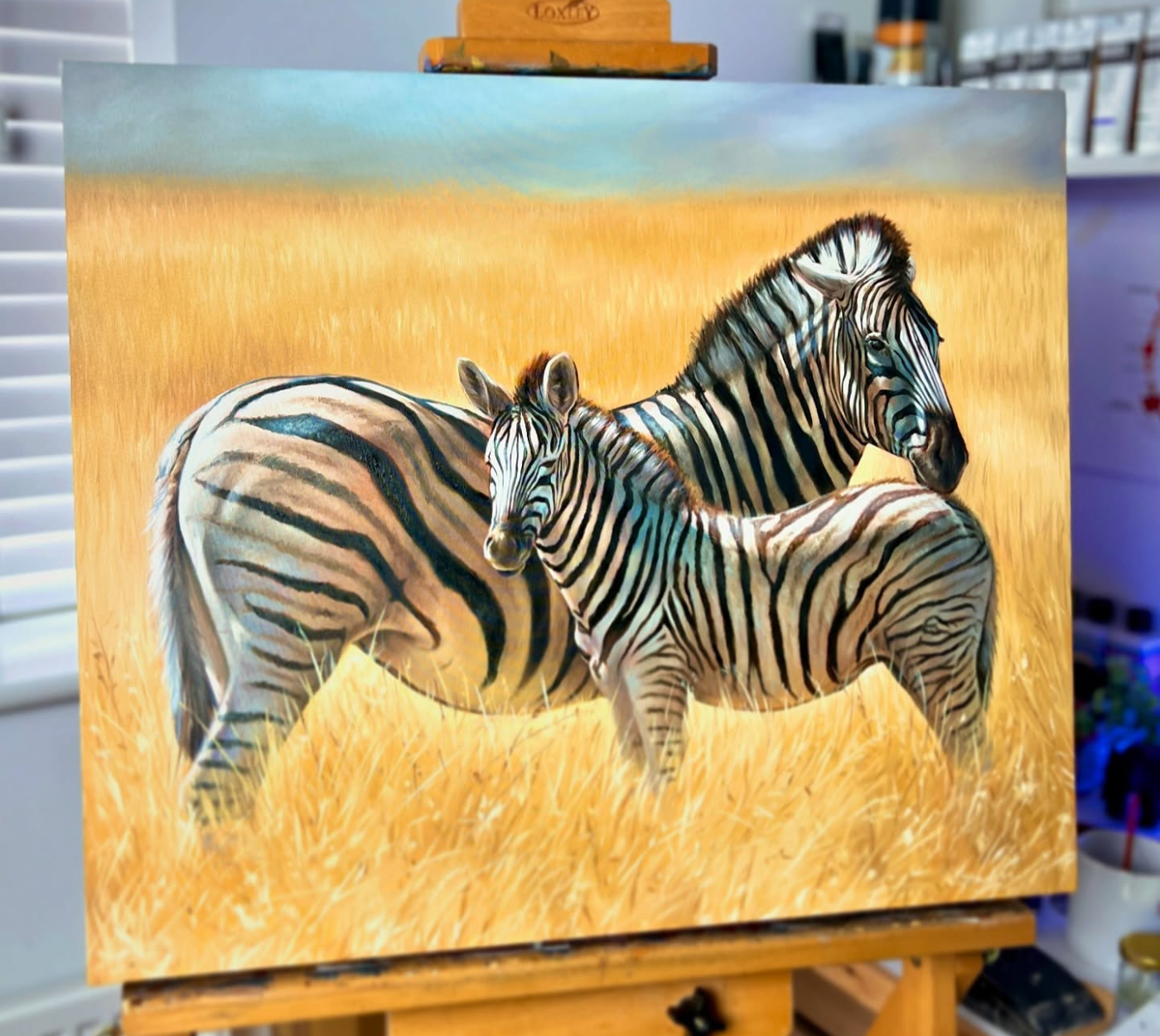
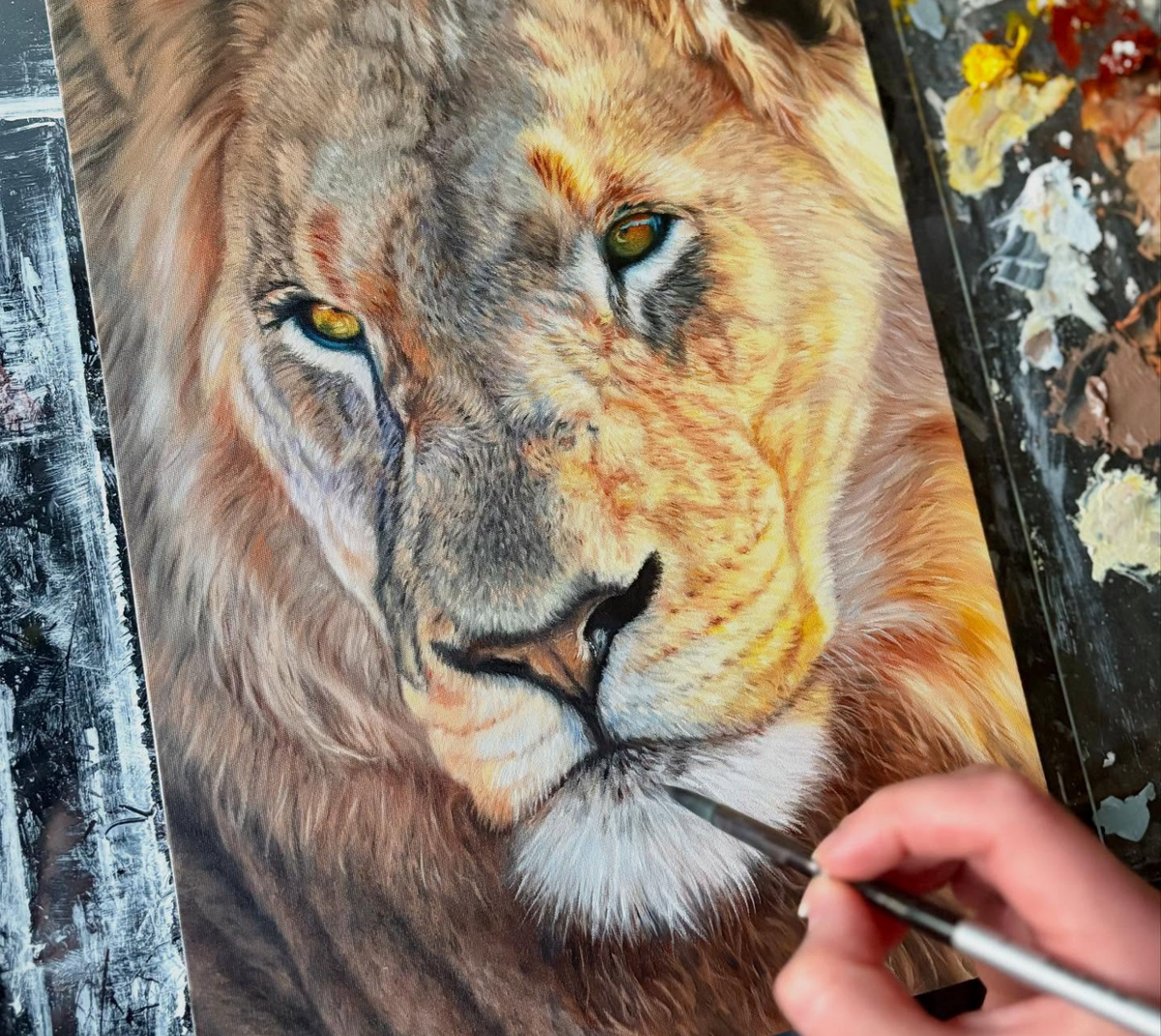
It holds its tension
Daniel Wilson, oils
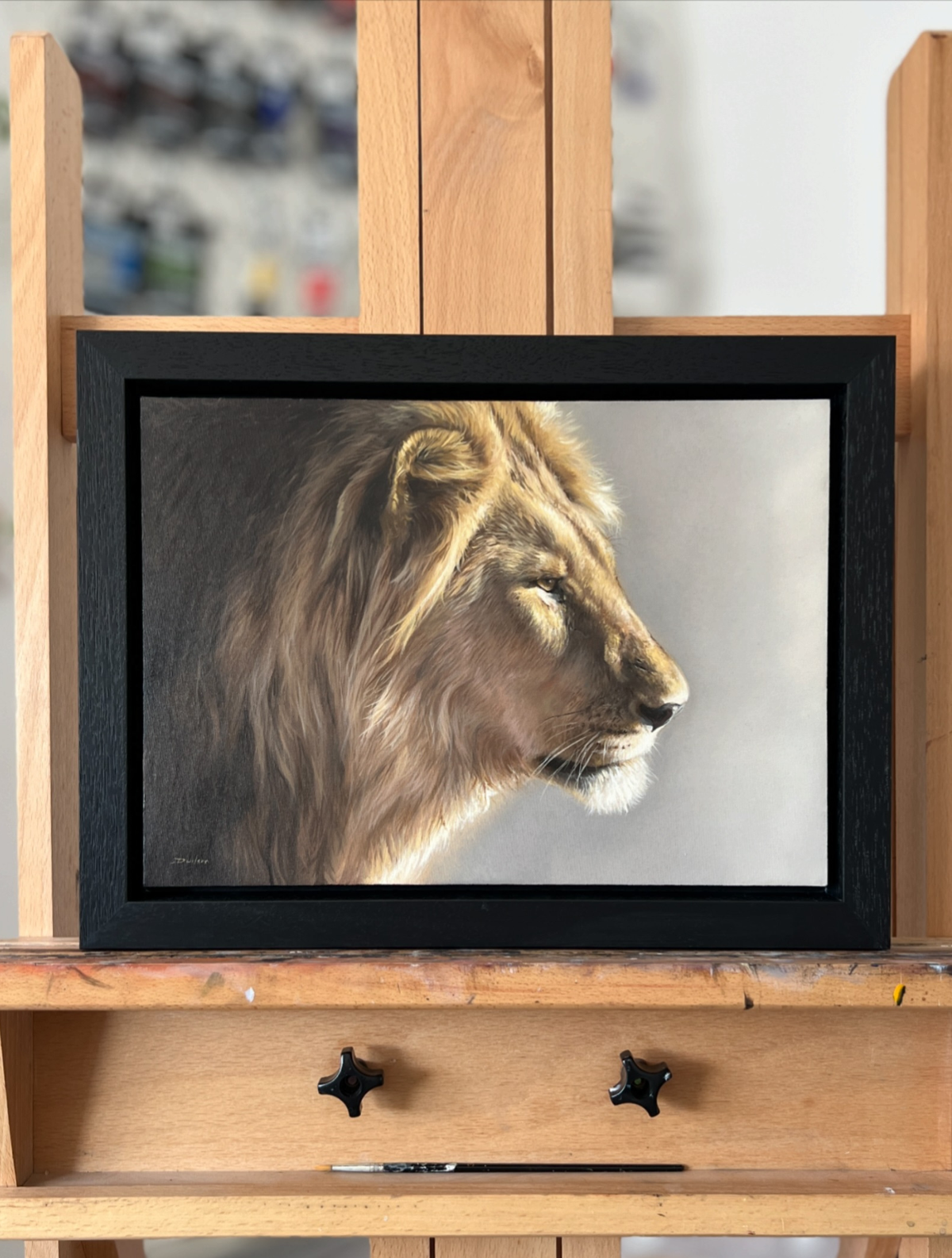
Daniel works heavy handed. On other canvases that means watching the surface give way under the pressure of the brush, and painting around a problem instead of into the picture.
In his step-by-step for The Artist he reports that the ACF canvas took his barrage of brush strokes and stayed tight and stable throughout.
The ACF canvas didn't sag at all.
Daniel Wilson, The Artist, October 2025
Smooth, with tooth
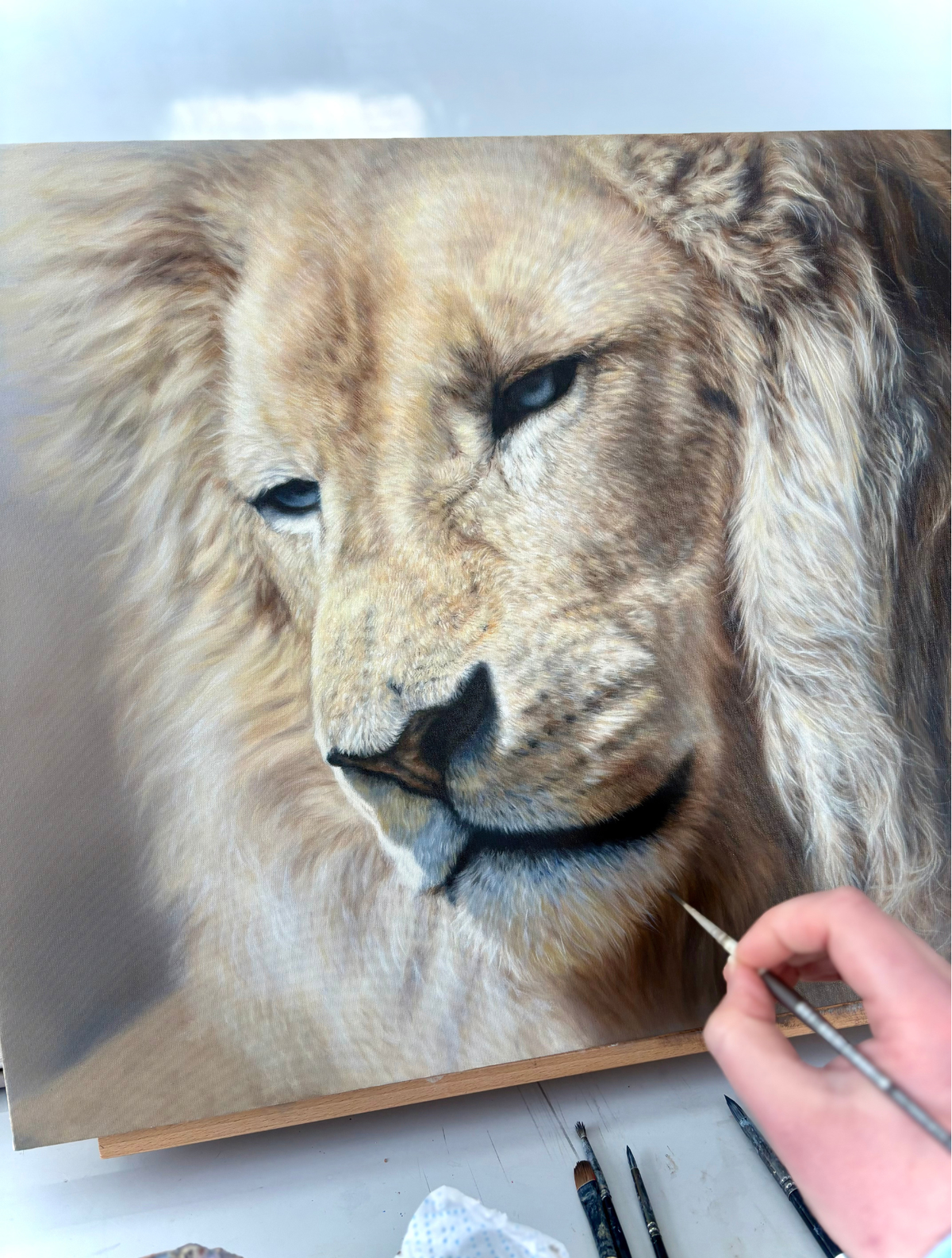
Amber Tyldesley, on the 20mm Stretch Canvas
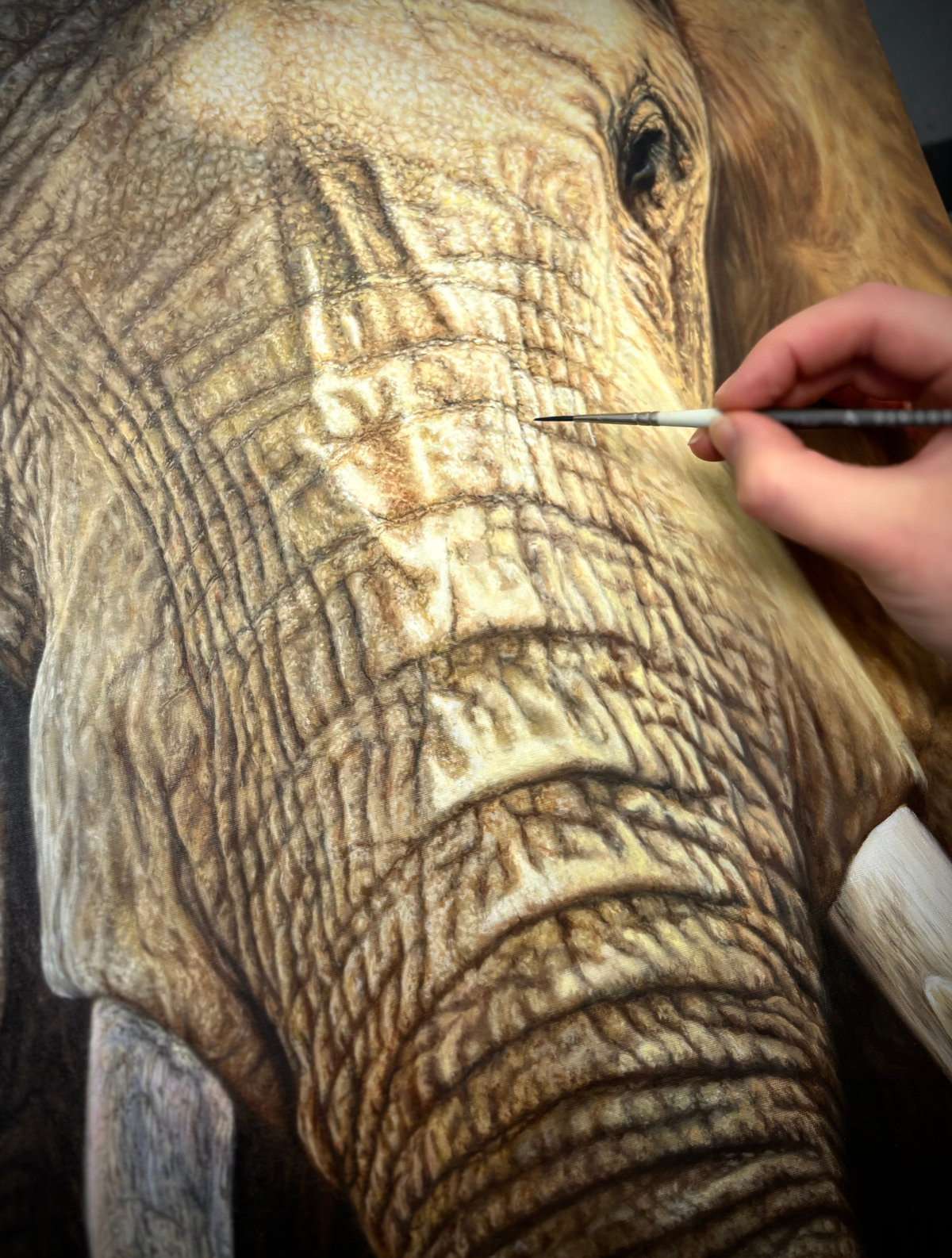
Amber paints soft transitions and very fine detail, so she needs a smooth surface that still has enough tooth to hold paint without interrupting its flow. Fine grain surfaces usually cost her that, feeling slick under the first layer.
Reviewing the 20mm Stretch Canvas in The Artist, having worked only on cotton and linen before, she reports the opposite: paint taking to the surface with very little pressure, and oils she could blend and move from the first layer on.
I've never seen a tighter canvas.
Amber Tyldesley, The Artist, August 2025
Acrylics
Daniel and Amber
Amber builds an acrylic underpainting in thinned raw umber before any oil goes down, working out shapes and values first. The surface takes both without a change of approach.
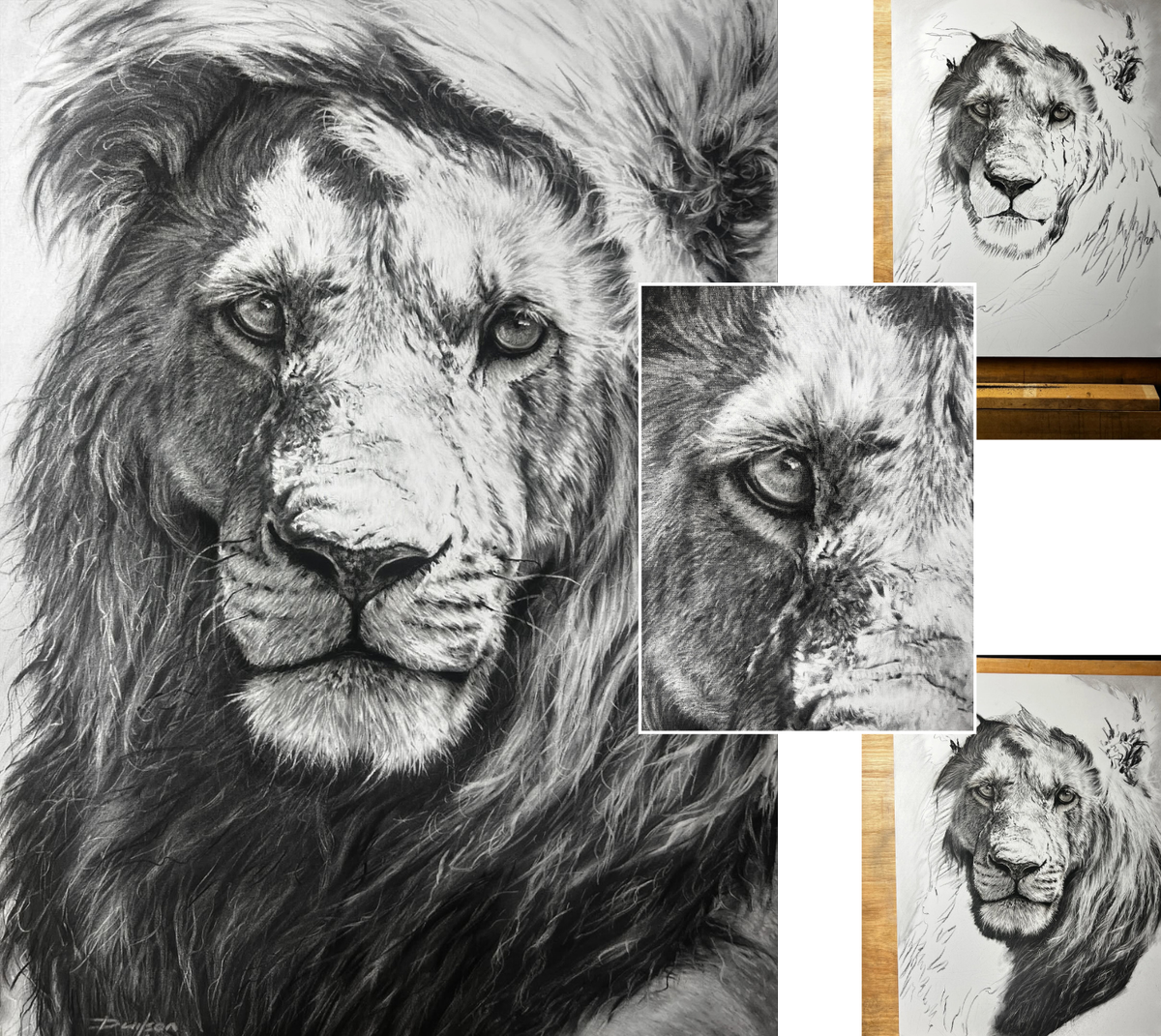
Charcoal
Daniel, on the Box Board Canvas
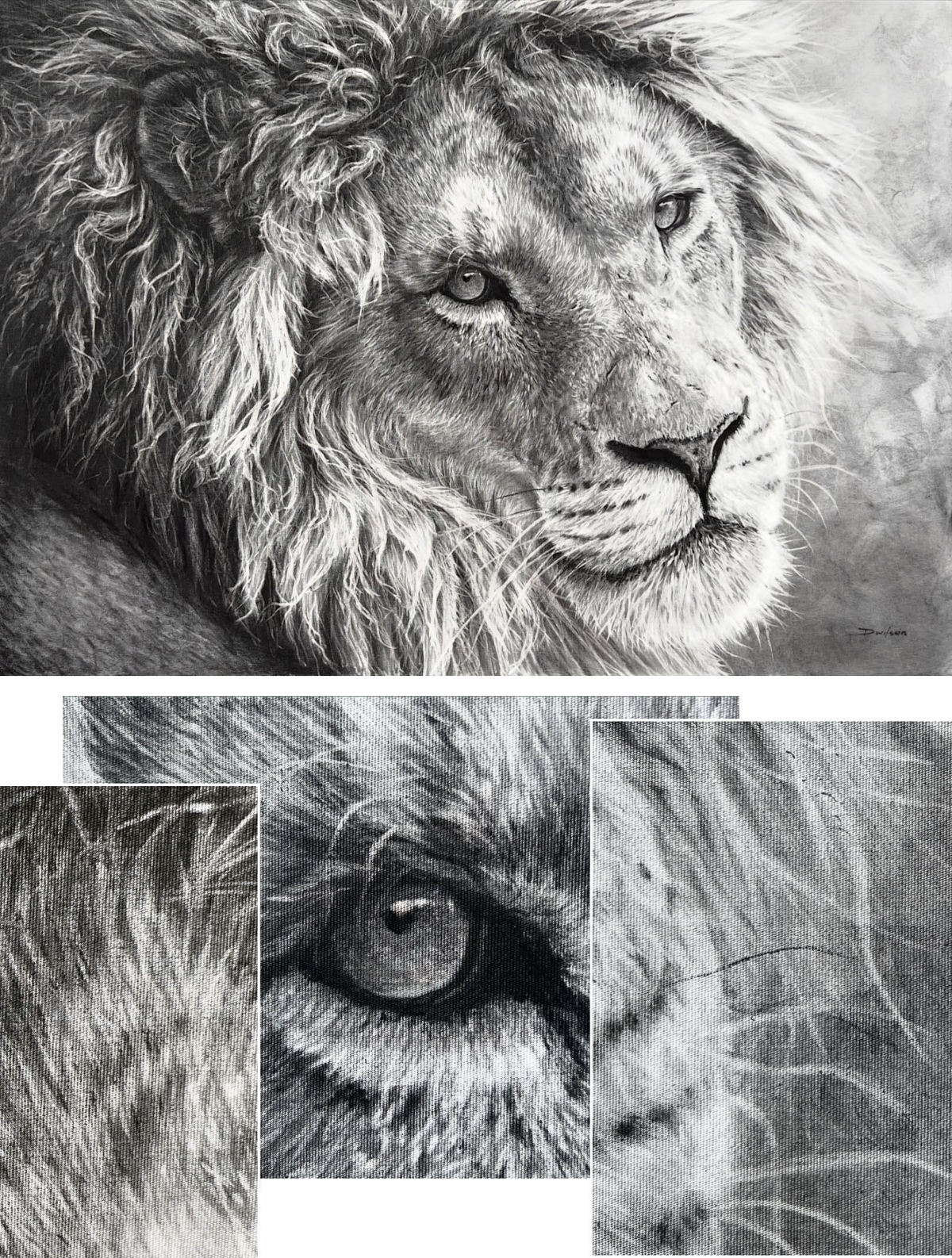
Most artists have never considered charcoal on canvas, because most canvas moves under the hand. The Box Board Canvas does not. The polyester surface is stretched over a 3mm HDF backing, so there is no drum, no give, and no flex to fight.
Pick by what you paint
The surfaces Daniel and Amber work on.
Choose your option



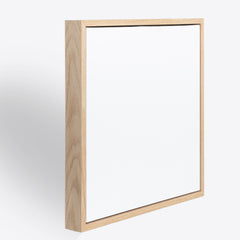
Square corners, ready for the frame
Amber Tyldesley, on the oak floating frames
Amber frames much of her work in floating frames, where the canvas sits inside the frame with a visible gap all the way round. That makes true 90 degree corners essential, because the gap has to run even. A canvas that is fractionally out shows immediately.
In her review she notes the canvas was square, with corners neatly folded and fastened at the back.
Both floating frame sets arrive assembled in oak veneer. The canvas lifts out on four screws. Nothing to build, nothing to order separately, nothing to re-stretch before a collector sees it.
What this canvas is, and what it is not
Worth being straight about, because it is not the right surface for everyone.
It is
- Primed, stretched and ready to paint out of the box
- 100% polyester, woven and coated to ACF's own specification
- Built on an engineered strainer that holds its tension under heavy brushwork
- Fine grain, and it takes paint from the first layer without feeling slick
- Square, with corners folded and fastened at the back
- Available rigid, when you need a surface that does not move
It is not
- Cotton or linen. It is a different surface and it behaves differently
- Sold as loose material, offcuts or swatches. Only as finished canvas
- Keyed. There are no corner wedges, because it does not need them
- An overnight switch. Artists coming from linen say it takes a couple of paintings to adjust
Daniel and Amber
Studio Wildlife
Daniel Wilson is an award-winning international wildlife artist, biologist and conservationist, and has painted wildlife for over fifteen years. He has been shortlisted for the DSWF Wildlife Artist of the Year competition on multiple occasions, and received the Association of Animal Artists Inaugural Chair Award for his wildlife work and his teaching through the Studio Wildlife YouTube channel and Patreon.
Amber Tyldesley is a previous DSWF Wildlife Artist of the Year finalist, won the People's Choice Award, and has been highly commended by the judging panel on several occasions. She works from her studio in Warrington, building layered pieces with a strong sense of depth and luminosity. Conservation sits at the heart of her work, with artwork sales raising over £15,000 for projects across the UK, Africa and Asia in recent years.
Both have written step-by-step features for The Artist: Daniel in October 2025 and Amber in August 2025.
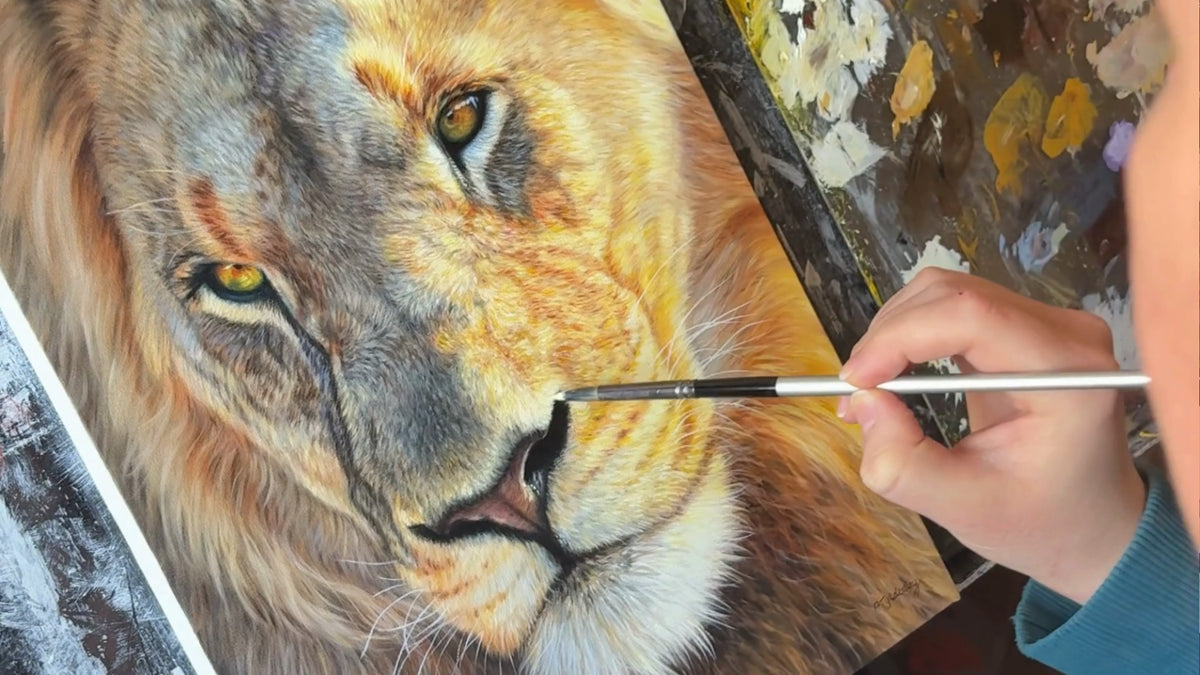
Where to start
Three ways in, depending on what you are painting.
